
Roof warranties explained
Understand material and workmanship coverage, the written terms behind them and the records that connect a roofing project to a later concern.
Understand what stands behind the roofing work
A warranty is useful when you know who stands behind it, what problem it covers and what the promised remedy is. A long-sounding term does not answer those questions by itself. Material defects and installation concerns can involve different issuers and different conditions.
Keep those distinctions connected to the actual roof. A leak needs a cause identified before anyone can decide which coverage applies. The written project documents should identify the covered concerns, conditions and available remedy.
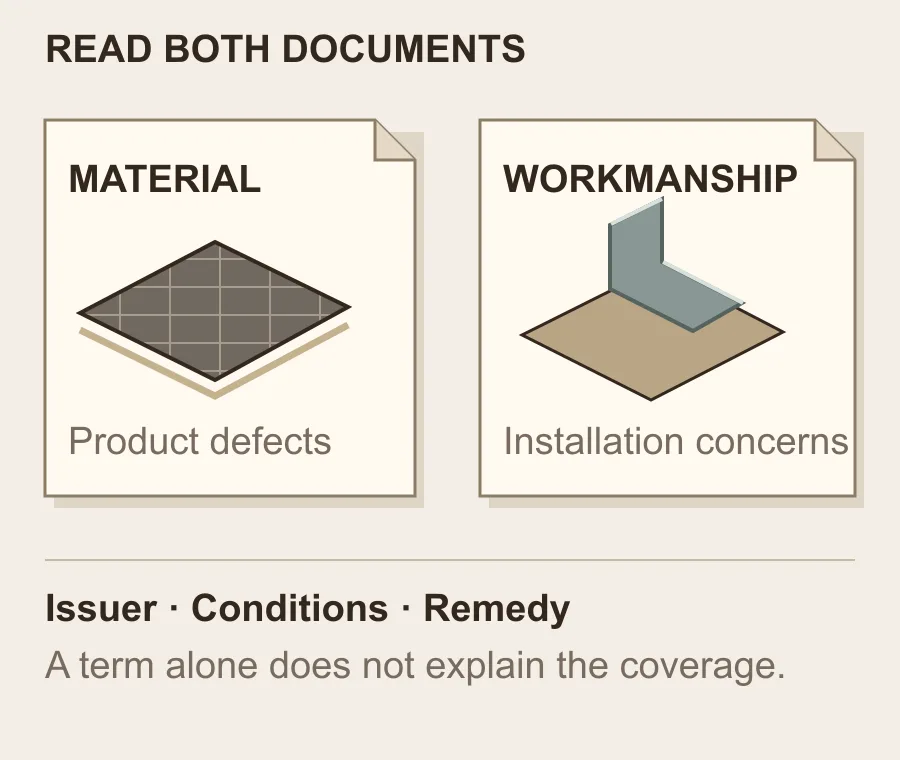
- Material coverage
- The product defects covered by the named issuer.
- Workmanship coverage
- Specified installation concerns under separate written terms. Identify the issuer, conditions and remedy for each.
Material and workmanship coverage
The actual project documents establish the coverage, and the issuer determines claims under those terms.
Details that affect roofing coverage
- Installation and the selected assembly
Roofing products have instructions for slope, attachment and compatible details. A departure can affect both performance and coverage. The workmanship and material documents should describe their own conditions rather than relying on a broad phrase such as “fully warranted.”
- Registration and proof of the work
Some coverage has registration or documentation conditions. Product information, the contract, invoices and any warranty certificate help connect the completed work to the promised terms. The project should make clear which documents are provided and who handles any required registration.
- Later repairs and changes
Equipment installation, new penetrations, incompatible patching or other alterations can affect roof details and may affect coverage. A repair should suit the system and follow the relevant warranty process, rather than assume all later work is automatically included.
- Transfers and changes of ownership
Coverage does not necessarily move to the next owner unchanged. Transfer rules, notices, fees or time limits depend on the actual warranty. The written document is the place to establish what applies.
- Maintenance and exclusions
Storm damage, poor drainage, neglected upkeep or unrelated building movement may fall outside a particular warranty. Required maintenance and reporting conditions should be understood as part of the coverage, without treating them as a promise that every later leak will be paid.
Roof warranty FAQs
Does a leak prove the roofing product is defective?
No. Water can enter through a failed installation detail, damaged flashing, a later penetration or another part of the assembly. Finding the cause is necessary before deciding which, if any, coverage applies.
Does a warranty replace homeowners insurance?
No. Warranty coverage addresses its specified defects or installation concerns. Insurance addresses covered losses under a separate policy. Storm damage and product defects are different questions.
Will the warranty transfer when the home is sold?
Only as the written terms allow. Some coverage has a transfer process or limits. The existing documents should be reviewed for the property rather than assuming the next owner receives identical coverage.
What coverage will be included in my roofing project?
Any offered coverage should be stated in the project documents, with its issuer, conditions and remedy identified. Material and workmanship documents should each explain what happens if a covered concern appears.
What should happen if a concern appears?
Have the roof condition assessed and preserve the relevant project records. The cause helps determine the repair and the appropriate warranty or insurance process. A roof inspection is a useful place to start.
Understand the work and the terms behind it.
Tell us the property location and what brought you here. Start with a free roof inspection and a conversation about the work.